HIS 111 · World Civilizations I

The Silk Road

Trade routes that shaped civilizations...

Thesis

The Silk Road became one of the most influential trade networks in world history because it encouraged interaction between distant societies and helped spread ideas, religions, technologies, and innovations across continents — fundamentally shaping the development of civilizations from China to Europe before 1500 CE.

Scroll to explore
Major City
Trade Route
Caravan

Six Themes · One Road

Choose Your Journey

01

Origins & Early Trade

Silk, Zhang Qian, and the nomad-sedentary exchange

3 entries · 3000 BCE – 100 BCE
02

Routes & Geography

Oasis cities, deserts, mountains, maritime paths

4 entries · 200 BCE – 1500 CE
03

Goods & Commodities

Spices, paper, horses, glass, luxury crafts

4 entries · 200 BCE – 1500 CE
04

Cultural Exchange

Buddhism, Christianity, medicine, music, arts

4 entries · 100 BCE – 1500 CE
05

Empires & Politics

Mongols, Tang Chang'an, Sogdian networks

3 entries · 400 BCE – 1368 CE
06

Decline & Legacy

Black Death, maritime shift, modern echoes

2 entries · 1346 CE – Present

Theme 01

Origins & Early Trade

c. 3000 BCE – 100 BCE · 3 Entries

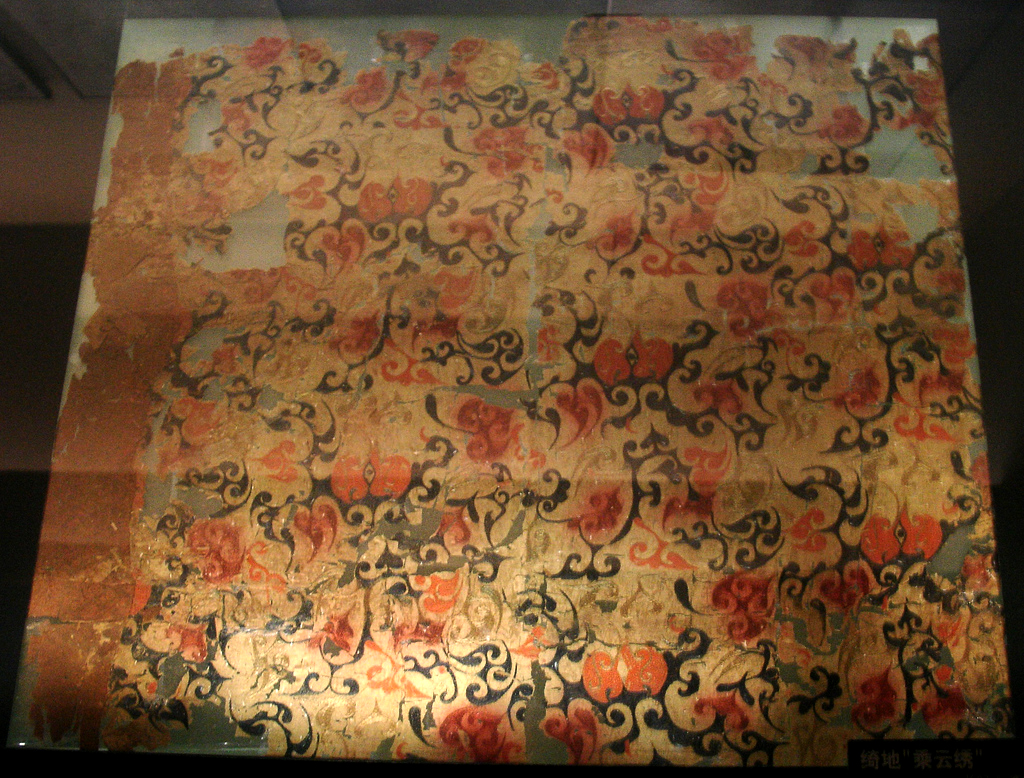
Han Dynasty silk textile
1 / 20

The Origins of Silk Production in China

Silk production began in ancient China as early as the Neolithic period, with archaeological evidence of silk threads dating to around 3000 BCE. The cultivation of mulberry trees and the domestication of silkworms (Bombyx mori) became a closely guarded secret for millennia. Chinese mythology credits Leizu, wife of the Yellow Emperor, with discovering silk production when a cocoon fell into her tea. By the Han Dynasty, silk had become a valuable commodity traded westward, establishing the foundation for what would become the Silk Road.

Source: Liu, Xinru. "Silk Road." World History: Gale in Context, Gale, 2021. [Gale Database]
Zhang Qian's expedition

Zhang Qian's Expedition to the West

Hover to reveal →
2 / 20

In 138 BCE, Emperor Wu of Han dispatched Zhang Qian on a diplomatic mission to establish alliances against the Xiongnu nomads. Though captured and held for ten years, Zhang Qian's eventual return with intelligence about Central Asian kingdoms, horses, and trade goods inspired the Han court to pursue direct trade relationships. His journey is traditionally regarded as the official opening of the Silk Road, transforming sporadic local trade into an organized transcontinental network.

Source: Textbook, Chapter 7: The Han Dynasty and Its Neighbors.
3 / 20

The Xiongnu and Steppe Nomad Trade

The Xiongnu Confederacy dominated the Mongolian steppe and played a crucial role in early Silk Road trade. These nomadic pastoralists controlled key routes and served as intermediaries between Chinese agricultural societies and western civilizations. Their mobility and military prowess forced Chinese dynasties to develop diplomatic strategies including heqin (marriage alliances) and tribute trade. The Xiongnu's demand for Chinese silk, grain, and luxury goods in exchange for horses and furs established patterns of exchange that would define Eurasian trade for centuries.

Source: Textbook, Chapter 6: Nomadic Peoples and Their Impact.
Xiongnu confederation map

Theme 02

Routes & Geography

c. 200 BCE – 1500 CE · 4 Entries

4 / 20
Registan in Samarkand

The Oasis Cities of Central Asia

Cities like Samarkand, Bukhara, and Merv served as vital waypoints along the Silk Road, providing water, food, and shelter to caravans crossing the arid interior of Asia. These urban centers developed sophisticated irrigation systems and became cosmopolitan hubs where merchants, scholars, and travelers from diverse cultures exchanged goods and ideas. The architectural legacy of these cities, with their grand mosques, madrasas, and caravanserais, reflects the wealth generated by centuries of transcontinental commerce.

Source: Hansen, Valerie. "Silk Road Cities." World History: Gale in Context, Gale, 2022. [Gale Database]
5 / 20
Taklamakan Desert

The Taklamakan Desert and Its Challenges

The Taklamakan Desert, one of the world's largest shifting sand deserts, presented formidable obstacles to Silk Road travelers. Caravans had to choose between the northern and southern rim routes, skirting the desert's edges where oasis towns provided essential resources. The harsh climate, with temperature extremes and scarce water, meant that only well-organized expeditions with adequate supplies could survive the crossing. Despite these challenges, the desert's very difficulty made the oasis cities along its borders prosperous by concentrating trade through narrow corridors.

Source: Textbook, Chapter 8: Trade Networks of the Ancient World.
6 / 20
Maritime Silk Road

Maritime Silk Road and Indian Ocean Trade

Parallel to the overland routes, the Maritime Silk Road connected Chinese ports like Guangzhou with Southeast Asia, India, the Persian Gulf, and East Africa. Monsoon winds dictated the sailing season, creating a rhythmic pattern of maritime commerce. Ships carried ceramics, silk, and spices across vast ocean distances. The maritime route became increasingly important after the Mongol Empire's decline and eventually surpassed overland trade by the 15th century, setting the stage for European maritime exploration.

Source: Textbook, Chapter 9: Indian Ocean Commerce.
7 / 20
Pamir Mountains

The Pamir Mountains and High-Altitude Trade

The Pamir Mountains, known as the "Roof of the World," presented some of the most challenging terrain on the Silk Road. At elevations exceeding 4,000 meters, traders faced thin air, extreme cold, and treacherous passes. Yet these mountains also contained valuable resources including lapis lazuli, which was mined in Badakhshan and traded as far as Egypt. The high-altitude routes connected the Tarim Basin with the Fergana Valley and beyond, demonstrating the remarkable determination of ancient traders.

Source: Textbook, Chapter 8: Geographic Barriers and Trade Routes.

Theme 03

Goods & Commodities

c. 200 BCE – 1500 CE · 4 Entries

Spice market
8 / 20

Spices: The Fragrance of Empire

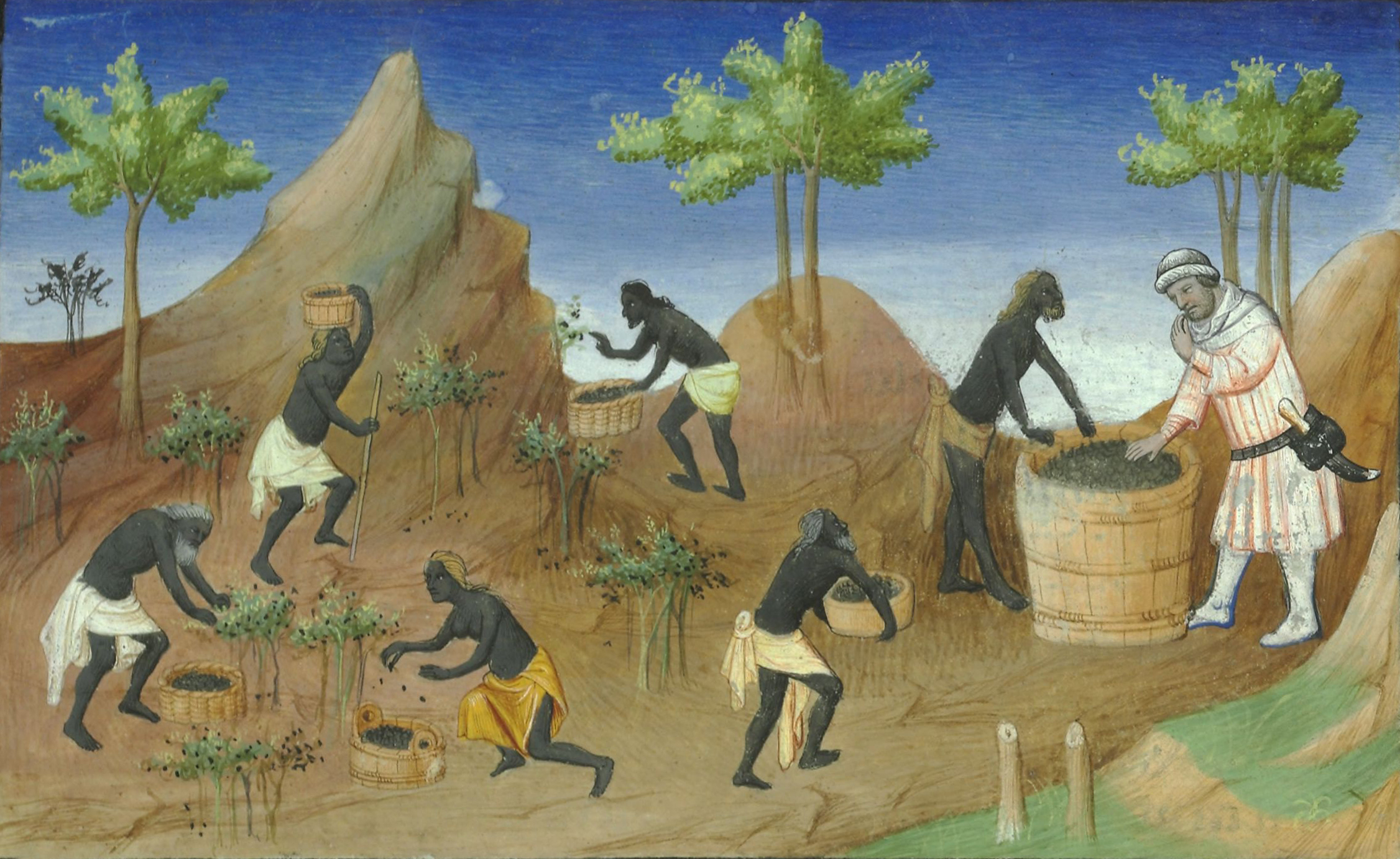
Spices — pepper, cinnamon, cloves, nutmeg — were among the most valuable commodities traded along the Silk Road. Originating in India and Southeast Asia, these aromatic substances traveled westward to flavor food, preserve meat, and create medicines in Europe and the Middle East. The demand for spices drove exploration and commerce, with some spices worth more than their weight in gold. The spice trade established direct maritime connections between Asia and Europe, eventually motivating Portuguese and Spanish voyages of discovery.

Source: Dalby, Andrew. "Spice Trade." World History: Gale in Context, Gale, 2020. [Gale Database]
Ancient Chinese paper
9 / 20

Paper and the Spread of Knowledge

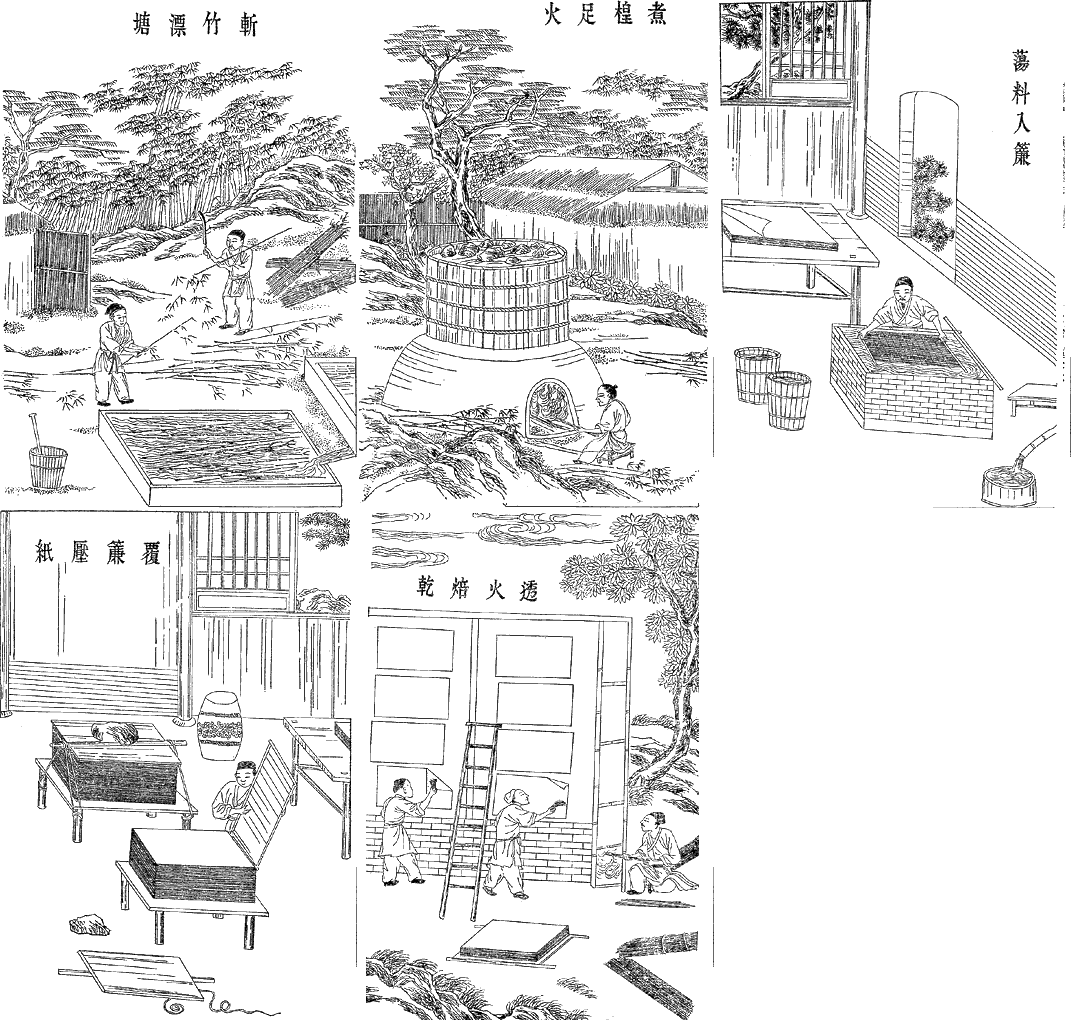
Paper, invented in China during the Han Dynasty, revolutionized information storage and transmission. The technology spread westward along the Silk Road, reaching Samarkand by 751 CE after Chinese papermakers were captured at the Battle of Talas. From there, papermaking spread to the Islamic world and eventually Europe, replacing parchment and papyrus. This innovation democratized knowledge, enabling the proliferation of books, bureaucratic records, and scholarly works across civilizations.

Source: Textbook, Chapter 11: Technology and Innovation in the Ancient World.
Ferghana horse
10 / 20

Horses and the Military Revolution

The Ferghana horses of Central Asia were highly prized by Chinese emperors for their strength, speed, and endurance. These "heavenly horses" transformed Chinese military capabilities and agricultural productivity. The horse trade exemplified the mutual benefits of Silk Road commerce: China received superior cavalry mounts while Central Asian nomads obtained silk, grain, and manufactured goods. This exchange influenced military tactics, agriculture, and social structures across Eurasia.

Source: Textbook, Chapter 7: Warfare and Technology.
Roman glass bowl
11 / 20

Glass, Gems, and Luxury Crafts

While silk flowed westward, luxury goods traveled eastward from the Mediterranean. Roman and Byzantine glassware, with vivid colors and intricate designs, became prized in Chinese courts. Precious stones — lapis lazuli from Afghanistan, jade from Khotan, pearls from the Persian Gulf — adorned imperial regalia and religious artifacts. Metalwork with Greek, Persian, and Sogdian motifs circulated as diplomatic gifts. These exchanges created hybrid artistic styles reflecting the cultural fusion of the Silk Road.

Source: Textbook, Chapter 10: Art and Material Culture.

Theme 04

Cultural Exchange

c. 100 BCE – 1500 CE · 4 Entries

12 / 20
Bamiyan Buddha

Buddhism Spreads Along the Silk Road

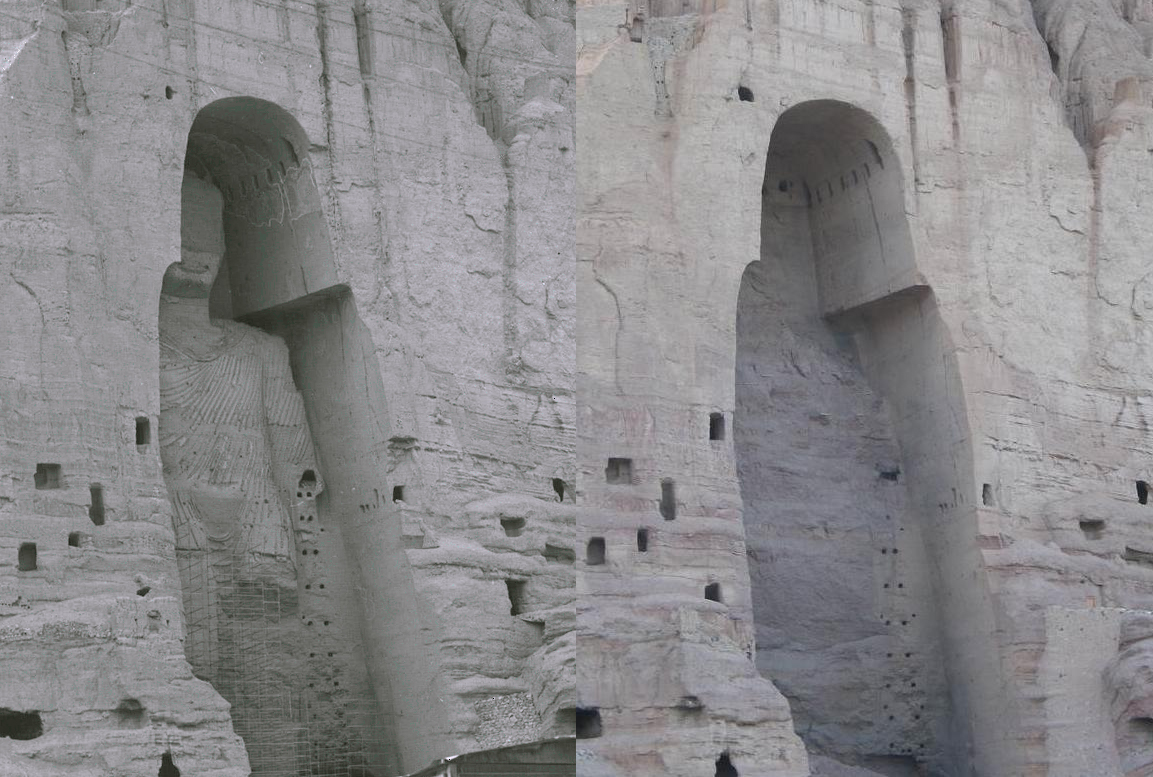
Buddhism traveled from India to China along the Silk Road, transforming both the religion and the cultures it encountered. Buddhist monks, merchants, and missionaries carried scriptures, art, and architectural styles across Central Asia. The Bamiyan Buddha statues in Afghanistan and the cave temples at Dunhuang represent the fusion of Indian, Hellenistic, and Chinese artistic traditions. By the Tang Dynasty, Buddhism had become one of China's major religions, profoundly influencing philosophy, literature, and visual arts.

Source: Ebrey, Patricia Buckley. "Buddhism in China." World History: Gale in Context, Gale, 2019. [Gale Database]
13 / 20
Nestorian Stele

Nestorian Christianity and Religious Diversity

Nestorian Christianity, declared heretical in the Roman Empire, found fertile ground in Persia and Central Asia. Nestorian missionaries established communities along the Silk Road, reaching as far as Chang'an by 635 CE. The Nestorian Stele, erected in 781 CE, documents the religion's presence in China. This branch of Christianity adapted to local cultures, translating texts into Syriac, Sogdian, and Chinese, and coexisted with Buddhism, Zoroastrianism, and Manichaeism in the cosmopolitan cities of the Silk Road.

Source: Textbook, Chapter 12: Religious Transformations in Asia.
14 / 20
Avicenna Canon of Medicine

Medical Knowledge and the Silk Road

Medical knowledge flowed bidirectionally along the Silk Road. Chinese physicians learned about Indian Ayurvedic practices and Persian humoral theory, while Western doctors gained access to Chinese pharmacology including acupuncture and herbal remedies. The translation of medical texts into multiple languages created a shared repository of healing knowledge. Ibn Sina's Canon of Medicine, synthesized from Greek, Persian, and Indian sources, became the standard medical textbook in both the Islamic world and Europe for centuries.

Source: Textbook, Chapter 13: Science and Medicine in the Premodern World.
15 / 20
Sogdian musician figurine

Music, Dance, and Performing Arts

Musical instruments and performance traditions traveled extensively along the Silk Road. The pipa (Chinese lute) and erhu (two-stringed fiddle) have Central Asian origins. Sogdian dancers were prized entertainers at Chinese courts during the Tang Dynasty. Persian musical modes influenced Central Asian and Chinese compositions. This cross-cultural exchange created new hybrid art forms that enriched the musical heritage of multiple civilizations, from the Islamic world to East Asia.

Source: Textbook, Chapter 10: Art and Material Culture.

Theme 05

Empires & Politics

c. 400 BCE – 1368 CE · 3 Entries

Mongol Empire
16 / 20

The Mongol Empire and the Pax Mongolica

The Mongol Empire, founded by Genghis Khan in 1206, created the largest contiguous land empire in history. Under Mongol rule, the Silk Road experienced its golden age of security and commerce — the Pax Mongolica. The Mongols established postal relay stations (yam), standardized trade regulations, and protected merchants throughout their domains. This period saw unprecedented movement of people, goods, and ideas across Eurasia, including the journeys of Marco Polo and Ibn Battuta.

Source: Weatherford, Jack. "Genghis Khan and the Making of the Modern World." World History: Gale in Context, Gale, 2018. [Gale Database]
Chang'an city
17 / 20

Tang Chang'an: The World's Greatest City

During the Tang Dynasty, Chang'an (modern Xi'an) was the largest and most cosmopolitan city in the world, with a population exceeding one million. Its grid-plan layout, markets, and foreign quarters hosted merchants, diplomats, and religious missionaries from across Asia. The city was a terminus of the Silk Road, where goods from Persia, India, Central Asia, and Europe converged. Tang Chang'an represented the height of Silk Road civilization — a place where cultures, religions, and technologies freely intermingled.

Source: Textbook, Chapter 14: Urban Centers and Civilization.
Sogdian merchants
18 / 20

The Sogdian Merchant Networks

The Sogdians, an Iranian people from Central Asia, were the preeminent merchants of the Silk Road. Their diaspora communities stretched from Samarkand to Chang'an, creating a network of trade, information, and cultural exchange. Sogdian merchants acted as intermediaries between Chinese, Indian, Persian, and Byzantine markets. They introduced new technologies, religions, and artistic styles across Eurasia. Their language became a lingua franca of trade, and their communities served as cultural bridges between civilizations.

Source: Textbook, Chapter 8: Trade Networks of the Ancient World.

Theme 06

Decline & Legacy

1346 CE – Present · 2 Entries

The Triumph of Death
"

"
19 / 20

The Black Death and the Silk Road

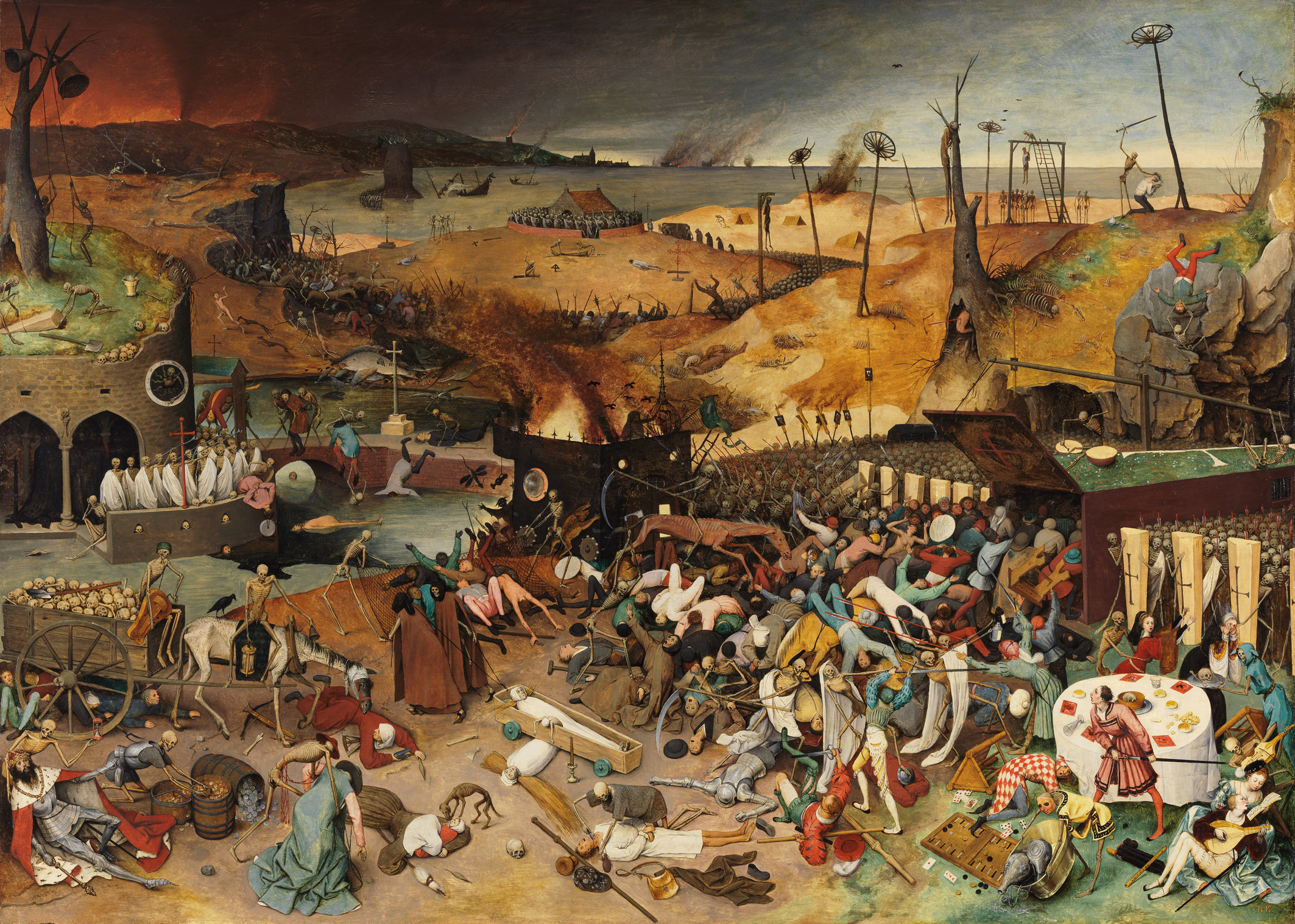
The Black Death traveled along the Silk Road, reaching the Crimea by 1346 and devastating Europe within a decade. This pandemic, carried by fleas on merchant ships and caravan animals, killed an estimated 30-60% of Europe's population. The disruption of trade networks, depopulation of cities, and collapse of demand for luxury goods severely impacted Silk Road commerce. The plague also contributed to the decline of the Mongol Empire and the fragmentation of political authority across Eurasia.

Source: Textbook, Chapter 15: Crisis and Transformation in the 14th Century.
Belt and Road Initiative
0
Years of Silk Road History
20 / 20

The Enduring Legacy of the Silk Road

While the traditional Silk Road declined with the rise of maritime trade and the Ottoman Empire's control over land routes, its legacy endures. The Belt and Road Initiative, launched by China in 2013, explicitly evokes Silk Road imagery in its vision of transcontinental infrastructure and trade. The cultural exchanges initiated along these ancient routes — in religion, art, technology, and cuisine — continue to shape our world. The Silk Road reminds us that globalization is not a modern phenomenon but a fundamental pattern of human civilization.

Source: Frankopan, Peter. "The Silk Roads: A New History of the World." World History: Gale in Context, Gale, 2017. [Gale Database]

Chicago · Notes & Bibliography

Bibliography

24 Sources Organized by Category

Primary Sources

Gale Database Sources

Academic Books & Monographs

Journal Articles & Reference